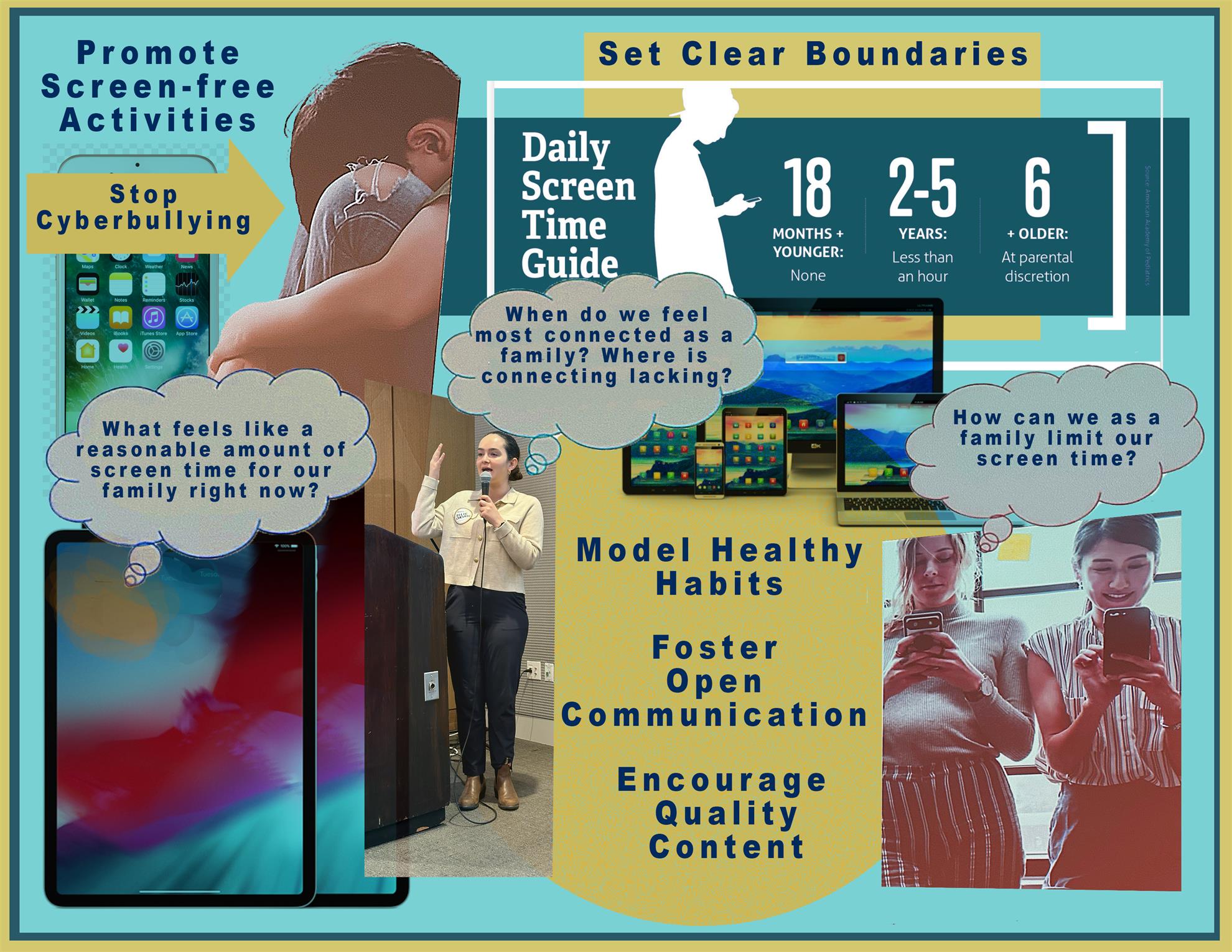
Ellie Choate, PHD, Pediatric Psychology Fellow at Children’s Hospital presented “The Importance of Limits on Screen Time” to our club members at a recent weekly meeting at St. Camillus. Her presentation is one in a series of Peacebuilding topics planned for this year.
Did you know the average amount of screen time for adolescents (ages12-17): 7 to 8.5 hours per day.
Adolescents with higher non-schoolwork screen time have:
- Infrequent physical activity
- Infrequent well-rested/irregular sleep schedules
- Depression and anxiety symptoms
- Insufficient peer support
There are pros and cons to screen time!
About 15.4% of high school students reported cyberbullying victimization from 2011 to 2019
Cyberbullying: Intentional and repeated harm inflicted through electronic devices and social media (Midgett et al., 2020).
- Elevated screen time is associated with suicidal ideation, planning, and attempts
- Creates unrealistic comparison which leads to a reduction in self-image.
- Screens have allowed us to seek comfort in situations of boredom.
- The mind is not left to be creative.
Brain Drain: Presence of phone drains creativity.
Use of screen time is directly influencing developing children’s language skills, including their vocabulary.
Results include:
- Weakened conversation skills
- Diminished understanding of nonverbal cues
- Superficial interactions
Here are some general, evidence-based strategies to help minimize the negative effects of screen time for children:
1. Set Clear Boundaries
- Establish daily or weekly screen time limits appropriate for your child's age.
- Use parental controls and device settings to enforce these limits.
2. Encourage Quality Content
- Choose educational and age-appropriate programs, apps, and games.
- Co-view or co-play with your child to discuss what they see and learn.
3. Promote Screen-Free Activities
- Encourage outdoor play, reading, hobbies, and family time.
- Designate certain times (e.g., meals, bedtime) and areas (e.g., bedrooms) as screen-free zones.
4. Model Healthy Habits
- Demonstrate balanced screen use yourself.
- Discuss the importance of moderation and self-regulation.
5. Foster Open Communication
- Talk with your child about online safety, digital citizenship, and the potential risks of excessive screen time.
- Encourage your child to share their online experiences and concerns.
Thank you, Dr. Choate, for sharing the Importance of Limits on Screen Time for our children as well as us adults.